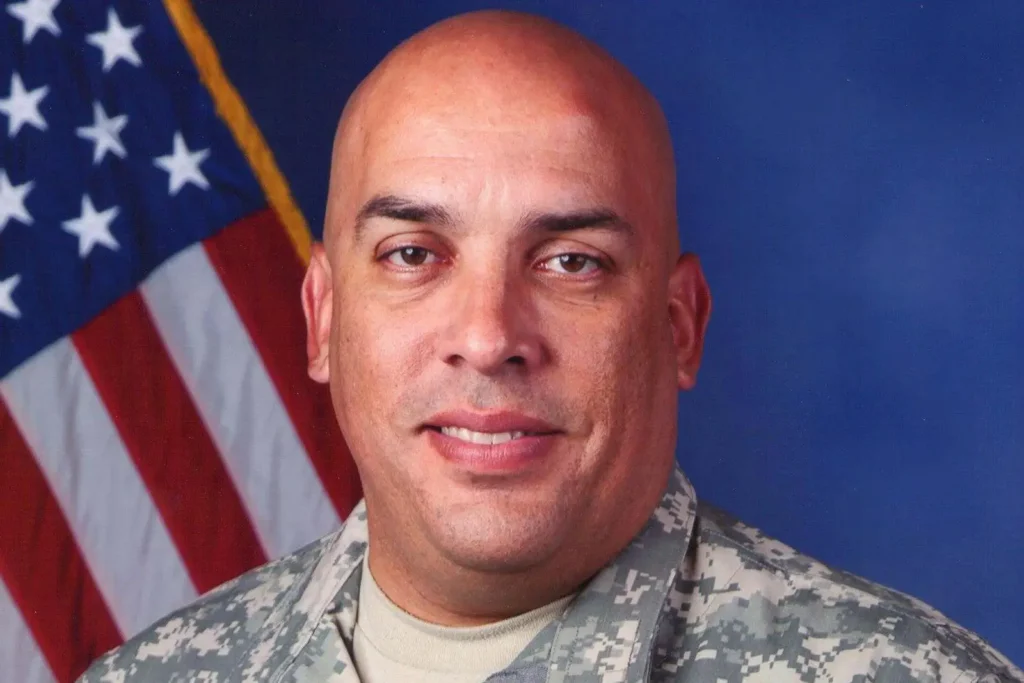
This Veterans Day, NDM Hospitality’s Pablo Otero reflects on the military experience that shaped his leadership, his transition to civilian life and finding his way back to a lifelong passion. When Pablo Otero enlisted in the U.S. Army at 32, he wasn’t following a traditional path into military service. He was at a crossroads in his life, looking for stability, direction and a fresh start.
“I always wanted to join the military,” Otero recalled. “I needed to do something with my life.”
He originally hoped to join the Air Force, but age eligibility requirements led him to pursue a different path. In 2003, he walked into an Army recruiting office, ready to make a change. When the recruiter asked how soon he wanted to leave, his answer was simple: “Yesterday.” What began as a personal turning point became an 11-year military career that included four deployments and responsibilities far beyond anything he had imagined.
At his final duty station at Fort Belvoir, Virginia, Otero supervised a team of 10 to 15 soldiers responsible for maintaining classified satellite communications systems, including a backup communications link for Air Force One during the Obama administration. Today, more than a decade after leaving the Army, Otero serves as senior director of programming for NDM Hospitality, overseeing technical entertainment operations across the company’s Florida properties and helping bring concerts, festivals and community events to life at Promenade at Sunset Walk in Kissimmee.
While military satellite communications and live entertainment may seem like two entirely different worlds, Otero sees a clear connection. The technical expertise, discipline and problem-solving skills he developed in the Army continue to influence how he approaches his work and leads his team.
Finding Direction Through Military Service
For Otero, one of the most valuable lessons from his military career was the importance of structure. The Army introduced him to a daily routine built around responsibility, accountability and completing the task at hand. It also taught him how to manage his finances, handle pressure and approach challenges with a greater sense of purpose.
“Structure,” he said when asked about his biggest takeaway from military service. “In my case, I was lost, so it gave me guidance.” That structure became particularly important during his deployments, when adapting to changing circumstances and working through difficult situations were part of everyday life. It also shaped his approach to leadership. Otero learned that when something goes wrong, the answer isn’t to give up. It’s to keep looking for a solution. That philosophy would eventually become central to his second career.
Trading Satellite Communications for Stage Lights
When Otero left the Army in 2014, his priority was returning to Florida to be closer to his children.
He turned to social media, letting friends know he was preparing to leave military service and looking for work. A friend employed by PSAV, an audiovisual production company now known as Encore Global, encouraged him to apply for a position in Orlando. Otero joined the company as an audiovisual technician at Walt Disney World Swan and Dolphin, working on corporate meetings and events. He advanced to a floor lead position and later to technical supervisor, applying his military communications background to increasingly complex audiovisual productions. But the transition wasn’t entirely seamless.
After years in an environment where orders, discipline and direct communication were part of daily life, Otero had to adapt his leadership style to a civilian workplace. He recalls a former supervisor joking that the team had its own “Rottweiler” because Otero was so accustomed to taking charge and giving direct instructions. “I had to eventually find my way to tone it down,” he said, acknowledging that learning to communicate differently was part of his adjustment. While the work offered a natural application for his technical skills, Otero still wanted something more.
Before joining the military, he had worked as a DJ and helped produce Latin festivals throughout Orlando during the 1990s. Music and live entertainment had always been passions, and he hoped to find his way back to them. That opportunity came when PSAV assigned him to Margaritaville Resort Orlando, where he helped support the property’s opening in late 2018. During that time, he met members of the Sunset Walk team, including Ray Stines, who eventually approached him about joining the organization. When Otero learned the position would involve entertainment programming, the decision was easy. “This is what I really wanted to do,” he recalled. He officially joined NDM Hospitality on April 1, 2019.
A Different Kind of Mission
Today, Otero helps oversee the programming and technical demands behind Sunset Walk’s busy calendar of live entertainment and community events. The work requires coordinating multiple activities, troubleshooting equipment and responding quickly when something doesn’t go according to plan. For Otero, those challenges are familiar. In the Army, he learned how complex communications systems operate, how individual components work together and how to identify problems when something fails. Those same principles apply to modern audiovisual production, where microphones, speakers, computers and wireless networks must work together. “A lot of stuff that I did was communications,” he explained. “How one machine talks to a different machine. I think that actually helped me quite a bit.”
He recalled a technical issue following a lightning strike that created unusual noise in the entertainment district’s sound system. What initially appeared to be a problem with one piece of equipment turned out to involve two neighboring components. After investigating and replacing the affected equipment, his team resolved the issue. It’s the kind of methodical troubleshooting he practiced throughout his military career.
But technical knowledge is only part of the equation. On one particularly demanding weekend at Sunset Walk, Otero and his short-staffed team were responsible for a 5K race, a morning fitness class and an afternoon car show. His day began at 4 a.m., with preparations starting on-site an hour later. As each event concluded, the team had to reset equipment, prepare for the next activity and keep everything moving.
For Otero, the challenge wasn’t simply managing the schedule. It was maintaining focus when exhaustion began to set in. “I know I’m tired, but we got to push through this,” he said, describing the mindset he developed in the military. “We have to finish.” He believes that persistence has influenced the people around him. When problems arise before a major event, his team works through possible solutions rather than accepting that something cannot be done. “We don’t stop. We need to push forward until the job is done,” he said.
Finding His Place After the Army
Although Otero credits the Army with giving him direction, he understands that transitioning out of military service can be difficult. For service members who have spent years following a structured routine, entering a civilian workplace can bring uncertainty about where their skills fit and what comes next. Otero experienced some of those concerns himself, even before leaving the military. During a deployment in Iraq, he unexpectedly encountered one of his former drill sergeants, who had since become a master sergeant. At the time, Otero was considering leaving the Army but was concerned about employment opportunities and the economy. The conversation helped him identify another military assignment, eventually leading him to his position in Virginia.
Years later, when he finally transitioned into civilian life, he faced a different challenge: finding a career that combined his technical abilities with something he genuinely enjoyed. His path from military communications to corporate audiovisual production and ultimately live entertainment demonstrates how skills developed during service can translate into opportunities that may not be immediately obvious. It also brought him back to the Orlando community and the music and events he had enjoyed long before joining the Army.
Today, that sense of purpose extends beyond his professional life. His son is now serving in the Army, continuing a family connection to military service. Otero encouraged him to consider the military as a way to gain direction and develop skills for the future, just as he had done more than two decades earlier.
A Veteran’s Perspective on Moving Forward
As Veterans Day approaches, Otero reflects on his service with humility. He appreciates the gratitude expressed toward veterans but doesn’t seek recognition for having served. For him, military service was a commitment he chose to make, one that ultimately changed the direction of his life. And while his days now revolve around entertainment schedules, sound systems and
community celebrations rather than satellite communications and military deployments, the lessons remain with him.
He still approaches problems with determination. He still believes in finishing what he starts. And he continues to draw on the technical and leadership experience that helped him build a career in an industry he loves. For veterans preparing to leave military service, his advice comes from personal experience. “It’ll be okay. A lot of us are scared,” he said, acknowledging the uncertainty that comes with leaving behind a familiar way of life. His own journey is proof that a military career doesn’t have to define what comes next. Sometimes, the skills learned in service can lead back to a passion that was there all along.